Showing posts with label environmental hazards. Show all posts

Monday, March 12, 2012

Support Organic Management of Town Property

These lovely little blue flowers are coming up in front of Chez Sven. I used the cultivator to help them along right before Saturday's snowstorm, hard to believe with the thermometer hitting 60+ today! Tomorrow evening there's a Selectmen's meeting at the Wellfleet Library. Please seize this opportunity to let your voice be heard. Tell our Selectmen to choose organic land management for town property. Unfortunately, this item is towards the end of the meeting. If you are unable to attend, let the Select Board know what you think via email on bos AT wellfleet-ma.gov. That's what I just did. Here's my letter:

"I run a green B&B and was in charge of last year’s Green Sub-Committee of the Econ. Dev. Commission. Since I am not in Wellfleet tomorrow, I’m writing to urge you to adopt the Organic Land Management Policy for town property. This choice would help encourage townspeople to go organic and limit their use of herbicides, which pollute our sole-source aquifer. Every day new studies appear showing toxic chemicals in the environment may be responsible for the multitude of chronic illnesses people came to accept as normal during the last decades of the 20th century. For instance, the weed killer glyphosate is now believed to cause endocrine disruption in the developing fetus. Endocrine disruption may also be responsible for the dramatic increase in diabetes and the reproductive problems faced by young people of child-bearing age. Organophosphates may increase the risk of ADHD in children. Your choice to go organic will help protect Wellfleetians and raise their awareness on this very important issue. Thank you."

Wednesday, March 07, 2012

Stand Up For What You Believe

Campbell’s soups made my day. Not because I use mushroom soup for tuna casserole or particularly enjoy a cup of hot chicken noodle, but rather for a reason that should put some oumph into everyone’s step. Campbell’s has agreed to phase out BPA in can linings. Supposedly this effort has already started. The article by Amy Westervelt in Forbes explains that the FDA will establish new “acceptable” levels by March 31. France voted to uphold a ban on BPA last month, which hopefully will influence greedy food manufacturers in the USA, hoping to sell products in Europe. Westervelt explains that pressure from consumer groups also played a role in this turnaround, magnificent news for future children raised in America. Less risk of the chemical in their body burden!

For three years Cape Codders have urged NStar to refrain from spraying herbicides under the power lines because the toxic chemicals will filter into our sole-source aquifer. Who wants to drink water that contains traces of endocrine disruptors? Not I. Perhaps the recent decision to leave the 15 Cape towns off the YOP is evidence the executives at the utility company have been influenced by the outcry?

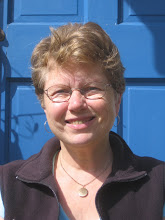
If you feel encouraged by these two unexpected developments and would like to add your voice to the outcry regarding another issue of critical importance to Cape Cod, join the nuclear safety rally on Sunday, March 11, anniversary of the disaster in Japan. The march starts at 1 pm at Lobster Pound, 252 Manomet Point Road in Plymouth. Should you be unable to come demonstrate but desire to protect Cape Cod from an accident similar to Fukushima all the same, take the time to write your senators after reading the Natural Resources Defense Council press release. Wellfleet is directly opposite Plymouth, and the woman in the above photo could be looking out, thinking of the nuclear reactor on the other side of Cape Cod Bay. The prevailing winds blow from the west. The owners will not close down this forty-year old plant by choice. We must make them, so please sign the NRDC letter. Thanks to movement at Campbell’s soups and possible movement at NStar, I like to think closing down Pilgrim is possible.

Protest of this type is new to me, although I was a member of the generation that stopped the war in Vietnam. Is protest a part of your regular agenda? Do you stand up for what you believe? What's your take on the petitions that are circulated? Do they make a difference?

Friday, January 27, 2012

More Beach Treasure?

Yesterday we discussed good stuff you can find on a beach. What about the bad stuff? There's a new foundation that needs your support. Surfrider works to protect the oceans, and us. Check out the amazingly effective ad on its blog.

And, while we are on the subject of toxins, here's some great news: Wellfleet Selectmen just signed an e-waste resolution, which "calls on its State Representative and State Senator to support passage of a producer take-back bill for electronic waste in the current legislative session, and calls on the Legislature to develop and support legislation to require Extended Producer Responsibility (EPR) for all consumer electronics products, computers, TVs and household hazardous products." More than half of the towns in Massachusetts have taken this step, including Provincetown, Truro, Eastham, Orleans, Brewster and Dennis. Congratulations to the Wellfleet Selectmen for signing on and to the Recycling Committee for spurring them to make this decision.

More reason to cheer, 28 state legislatures are tackling toxic chemicals, since Congress is still dragging its feet. Read all about it at the Alliance for a Healthy Tomorrow.

Thursday, December 22, 2011

Do You Get It?

Here on Cape Cod, we do not need four herbicides sprayed under our power lines. (Tell the EPA to ban glyphosate by signing this petition.) Toxic chemicals will get into our sole-source aquifer. Traces will end up in drinking water. Years from now, our children will look back and say, why did you not stop this?

Did you know that a study, relating to Cape Cod, was published by Boston University this week? The neurotoxin PCE, used from the late 1960s to the 1980s as vinyl-lining in the pipes of eight Cape communities – but, fortunately, not Wellfleet – leached into drinking water. Cape Codders who were exposed to PCE before birth, or as infants and toddlers, are believed to have an increased risk of drug-related problems, "risky behavior," later in life. (Hat tip to Sharyn, who forwarded this article.) Will these people also get cancer, since PCE is a carcinogen?

Last week The New York Times reported a probable link between the use of Tylenol (acetaminophen) in childhood and asthma.

How many new studies do we need? Every week fresh information on the side effects of synthetic chemicals pops up and nothing is done about it. The FDA and the EPA are like hobbled horses. Chemical companies, bent on profit, hold the reins now. Yesterday EPA Administrator Lisa Jackson called for limits on mercury emissions, but will these new standards get blocked by Congress and the courts?

If I sound a bit hysterical, it's because I am. Last winter I read Pollution: The Making of Our Chemically Altered Environment by Benjamin Ross and Steven Amter, a book which describes how the chemical industry has systematically avoided regulation. These policies continue. When will we all wake up?

There has been a major miscalculation over the 60 years since the end of World War II. Synthetic chemicals have residual effects beyond their original use. We need to take this into account ourselves, since our government seems incapable of doing so. Toxic chemicals, once created and exploited, can remain in the environment for decades and will harm us. We may absorb them through the water we drink. We may take some into our bodies in the air we breathe, like, for instance, diesel fumes, (which may soon be better regulated in Boston). They can be on non-stick cookware and get into cooked food. Even non-organic food is dangerous, laden with pesticide residue and carrying the risk of BPA leached from packaging.

I feel like Cassandra, crying a warning. In shock I watched a video from Monsanto in which company reps explained to farmers that they must do whatever it takes to rid their fields of weeds resistant to Roundup. No thought is given to the toxic effect of additional pesticides in our food and groundwater. No one speaks out to ask why Roundup Ready crops have failed and require more pesticides, not less.

McKay Jenkins gets it. His book What’s Gotten Into Us? Staying Healthy in a Toxic World sounds the alarm. He hopes that if we change our focus and approach the problem as “a health issue that affects kids”, environmentalists may get more traction.

Carcinogen abolitionist Sandra Steingraber gets it. The author of Living Downstream and Raising Elijah got cancer at age 20. She looked around and asked herself why. Her examination of the evidence led to conclusions, which she explains at the Breast Cancer Action Web site.

I, too, wonder at the disconnect between what the “scientific community knows about environmental carcinogens (quite a lot) and what cancer patients are told (very little).”

How can we change this situation? Elect legislators who get it. Support groups like Safer Chemicals, Healthy Families.
In the meantime, do the best you can to protect your loved ones from the stealth toxins that have become part of 21st century life.

I like to hope that, over the past few years, posts like this one have helped you become more aware of the dangers posed by synthetic chemicals in the environment. Would I be correct in this assumption? I know, at least, that my own adult children pay more attention to the pollution of food, water, and air. Do you?

Thursday, October 20, 2011

Let’s Talk Mattress Pads

WBCN used to have a radio show called The Big Mattress. I was on that show once. The topic was recent immigration to Boston. Charles Laquidara asked me to do a simultaneous translation so any French-speaking immigrants listening would understand. Today I run B&B Chez Sven with three big mattresses and, by the end of the season, they all need ...new mattress pads. A cinch to find, you say? Not anymore. Good mattress pads have become as rare as Democrats pleased with Obama’s first term.

Did you know that mattress pads may contain flame-retardants, a family of POPs (Persistent Organic Pollutants) called PBDEs? Indeed, now we have to worry about chemicals in mattress pads as well as in the mattresses themselves. Cynthia Gaw, a University of California student working on a senior thesis project about flame retardants in foam, discovered half of the mattress pads she had examined contained flame retardants, despite the fact there’s no flammability standard that requires manufacturers make them that way. (Read about PBDEs on this EPA information page, as well as in the great chapter that summarizes the topic in Slow Death by Rubber Duck.)

The laws to prevent bedroom fires were written back when no one knew better. For one thing, many people still smoked, which is why flame retardants seemed to make sense. No one realized these chemicals in themselves would prove harmful. Unfortunately the molecules make their way out of furniture into household dust.

Body burden analyses have shown flame retardants can accumulate in our bodies and cause health problems, ranging from hormonal changes to disruption of the reproductive system. The thyroid can be affected, as can the neurological development of infants and children. Flame retardants are a four-million dollar industry, so this dreadful situation is not going to change any time soon if the chemical companies have their way. (Have you already told your senators to support the Safe Chemicals Act of 2011?)

Do you know the composition of your mattress pads? If foam, they may be harming your health. I was going to take part in Cynthia’s study, but my mattress pads do not contain foam, which is the good news. (If you want to participate, email foamstudy AT gmail DOT com for instructions.) The bad news is I have not found a satisfactory mattress pad for 2012.

Here’s what I want in a mattress pad:
1.) No synthetic fiber.
2.) Doesn’t bunch up overnight.
3.) All cotton on top.
4.) Easily washable.
5.) No flame retardants.
6.) Made in the USA.

(Read how to avoid toxic chemicals in your home here.)

Do any innkeeper-readers have mattress pads to recommend? Do you worry about flame retardants in the home environment? Do you have friends who have had reproductive problems or testicular cancer?

Thursday, September 15, 2011

Toxic Chemicals Update ...

A reader requested an update on the NStar situation, so here goes: nothing has changed. NStar still intends to spray four herbicides under the power lines.

The good news? More people are realizing we are poisoning our environment. There was an article this week in Grist about glyphosate showing up in air and water. Another article in Mother Jones indicates glyphosate harms soil. And, WSNBC shared info on a large study showing pesticide residue leads to ADHD in children. (Glyphosate is sold retail as Roundup. Don't buy it!)

Also, good news for one hard-working environmentalist: Sandra Steingraber was awarded a $100,000 Heinz Award yesterday. Today, she donated this money to the fight against fracking. Hats off, Dr. Steingraber!

The bad news, here on Cape Cod? As I said, no movement from NStar despite the letters, banners, petitions. And, there is more local use of glyphosate to worry about … Did you hear the National Seashore plans to apply it to the phragmites at Herring Pond?

I called the Seashore yesterday to protest and spoke to Shelly Hall, Chief of Natural Resources, who said she understood my concerns. She said the project has been cleared with regional pest management, blah, blah, blah. They would use syringes, blah, blah, blah, and no surfactant, in a “highly controlled application.” They feel the threat to the ecosystem of having these reeds take over the ponds is not something the Seashore can permit. I asked, if there were no other way to get rid of phragmites, which I actually happen to like. “No, there is not,” she replied.

Actually, this information is not true. A machine exists to do the job, but the rental of this machine is expensive. (Source is Tracy Plaut, who used to live on Nantucket with husband Swede. "After we sued the town over the use of the herbicides, they brought in a piece of machinery that pulled them out at the root. It was more expensive which is why they wanted to do the chemicals in the 1st place, but effective. Swede said he doesn't remember who they rented the machinery from, but we know they didn't have to do it again for as long as we lived there.")

As if I were not upset enough as is, I read on the NRDC blog that President Obama and his staff have sided with the chemical industry and ordered the EPA to stand down in its effort to control the solvent TCE, a known carcinogen. I immediately wrote the White House to protest. The President’s decision represents a giant step backwards. I realize the EPA is under attack from the Tea Party, but having the White House throw such a curve ball must be upsetting to all who work on behalf of the environment.

Does this new development worry you? If so, what are you going to do about it? Are you inspired by Dr. Steingraber's donation?

Thursday, August 11, 2011

What's New On the Bookshelf?

Many of you probably know Sandra Steingraber for her second book, Living Downstream. Perhaps some of you have seen the film by the same name, featuring this erudite biologist and cancer survivor? Now comes Raising Elijah, a tale of her son’s childhood and the environment.

At the beginning of the story, the author turns down a job offer due to her determination to raise children in a town, presumed to be free of pollution. She and her husband choose an idyllic spot near a lake in upstate New York. By the final chapter, entitled "Bicycles on Main Street and High-Volume Slickwater Hydraulic Fracturing," the couple has realized their hometown is targeted by hydro-fracking companies.

I especially enjoyed the chapter on arsenic, with its description of how the chemical industry re-marketed a poison by inventing pressurized wood, used for children’s playgrounds. That arsenic now leaches out of these playground structures, endangering all kids who touch the wood and put hands in mouth. (Note Norway was the only nation to take action when this information became known.)

The other chapters cover topics that range from what causes asthma to endocrine disruption and hydro-fracking. I had a bit of a problem with the weaving of Elijah’s childhood into the real nitty-gritty, ie. what Dr. Steingraber’s seeks to communicate about environmental risk in today's world. Still, the book was very informative and, at times, lyrical. Take this passage, for instance: “The land that lies above the Marcellus Shale is full of farms and vineyards. It's the state's food shed and wine-growing country. It also contains some of the largest unbroken forest canopy in the Northeast. Fracking, thus, represents the industrialization of a rural landscape. If it goes forward, it will usher in the biggest ecological change since the original forests here were cleared. More than shale will be fractured.”

“Ultimately the environmental crisis is a parenting crisis,” Dr. Steingraber concludes. Indeed, life for young parents has become an obstacle course, with food labels to read, if labels are available, toxins to avoid, whenever risk is known, and fingers to cross that the very air children breathe is not laden with polluted particles that will make them sick later in life.

The sub-title is Protecting Our Children in an Age of Environmental Crisis. A dad who reviewed Raising Elijah wrote, "As a parent of two young children I share Dr Steingraber's assessment that protecting my children is primary. I will be giving copies of this book to my elected representatives in the hope that it doesn't take another 40 years to implement policy that is clearly needed to protect children. Well worth reading and sharing with friends. This would be a good choice for book groups and for every school and community library."

Protecting children should not be this difficult. What a shame we have polluted our world to such an incredible degree!

Friday, February 18, 2011

GreenCAPE to show Living Downstream

GreenCAPE will present a screening and discussion of the documentary Living Downstream, based on the book by ecologist and cancer survivor Sandra Steingraber, PhD, this Sunday, February 20 at 2:30. The film follows Steingraber as she travels across North America, working to break the silence about cancer and its environmental links. Steingraber had bladder cancer and gave up a tenured post to speak out on this important subject. Don't miss the free event at the Wellfleet Library and please spread the word to your friends.

A group of us Wellfleetians started showing such documentaries on environmental risks last fall and intend to show more in the spring. I ordered Living Downstream, but it arrived two months later than predicted. I have watched this documentary and highly recommend it. Steingraber coined the expression "carcinogen abolitionist."

Yesterday morning came more news about the risks of drinking Coke, Pepsi, etc.. The chemical that gives the popular soft drinks color has been recognized as causing cancer. Do you still drink the stuff? What say? I think we should all become "carcinogen abolitionists," don't you?

Saturday, June 26, 2010

Toxic Headaches & One Bright New Light

People know butterflies are fragile. Sometimes I wonder if they realize human life is, too?

Day 69 of the toxic oil spill in the Gulf ...

If I didn't have a B&B to run, I think I would spend all my time trying to alert the general public to the danger posed by toxic chemicals. I see myself in a rowboat with my grandchildren, desperately rowing, unable to reach the shore with the storm-of-the-century on the way: that is how I feel at each revelation of yet another threat to our environment. The wind picks up, the seas become choppy; the boat shivers and begins to slide backwards. We must turn that current around …

Yesterday Mandy Robinson, at Prudential Cape Shores, forwarded an email from a well-meaning man who hopes to spray Cape Cod properties for ticks. I read about the insecticide, approved 4/19/2010 by the EPA, and learned it’s toxic to bees and should not be used near bodies of water. Hey! We need to use a little sense here. Mandy emailed that she agrees: “I deleted the email and have no intention of sending it to our homeowners. I too have had Lyme Disease but am firmly against spraying. As you say it is another onslaught on the environment.”

Without exploring how insanely stupid it is to use a product that kills bees, let’s just concentrate on the issue of what is appropriate for Cape Cod, with its sandy soil. What we spray on trees, grass, bushes, rosebushes, etc. filters down into the water that we share through a system of private wells. I, for one, do not want toxic chemicals in my drinking water. As Congressman Delahunt stated in his March 30, 2010 letter to EPA Administrator Lisa Jackson, Cape Cod is a unique environment. Communities with a single source aquifer need “special consideration.”

So, if indeed this product was registered with the EPA, the place to start is writing the EPA. Can Astro Insecticide (Permethrin) be looked at more closely? Remember colony collapse? We need our bees. They are our pollinators.

Then I open a tweet from the Environmental Working Group and learn toxins have been found in whale bones, so many toxins – and heavy metals in particular – that the scientists are stunned. To quote, "These contaminants, I think, are threatening the human food supply. They certainly are threatening the whales and the other animals that live in the ocean," said biologist Roger Payne, founder and president of Ocean Alliance. Threatening our human food supply. Whoa! Strong words.

And, of course, there’s my pet peeve, all the toxic chemicals in our bodies. On this front, I’m happy to report the release of Stefan Jarl's documentary Submission, which was shown at the United Nations two months ago to high praise. Remember the title and tell your friends.

I am doing my best to find out what has been done to get this Swedish movie distributed in the United States. According to Professor Ake Bergman, “it has been a hit so far, even though the film is describing the dark side of chemicals. The film will be shown in Geneva for UNEP employees a week from now.” And, the director himself responded, “Yes, the United Nations is taking it around the world, screening it at seminars for scientists, researchers and so on, but of course I want the film to ‘speak’ directly to an audience. I know that a documentary like this very seldom reaches theaters - but it ought to, since the UN describes it as ‘the best film of the century.’”

Read more of Stefan Jarl’s description of Submission at The Canary Report. And, please watch the trailer.

(Readers, anyone have suggestions on how to help Mr. Jarl get his film shown in the USA? He is sending me the DVD, and guests this summer will be able to watch it here at Chez Sven.)

Thursday night my grandson was born in Los Angeles. Welcome to the world, darling baby! From now on, let’s all work together. We must create meaningful laws that stop this mindless pollution. It is no longer the business of someone else. Get involved. We all need to transform ourselves into a citizens’ army. You with me?

Thursday, May 13, 2010

Should We Heed the Presidential Cancer Panel?

Bloggers, time to make a difference. Spread the word about the recommendations made by the Presidential Cancer Panel – appointed by Pres. Bush, not Pres. Obama – because the national media isn’t doing so. Perhaps you've already heard the stunning report, warning of lifestyle choices and environmental factors, which can lead to cancer? There was an article in the New York Times on Friday, May 7th, stating that the American Cancer Society had pooh-poohed these recommendations. Come again? The organization “dedicated to eliminating cancer as a major health problem by preventing cancer, saving lives, and diminishing suffering” does not want us to take this warning seriously? How can that be? Methinks I smell crisp green lettuce in the form of contribution dollars. Turns out ‘tis so, according to World Wire, which lists major funding sources, including Dupont, cosmetic companies, and big Pharma. Take a look and draw your own conclusions.

Yesterday I returned to town hall to reread the Annual Report from 1976. It lists 11 pesticides, used or proposed for use, in Wellfleet, that year. In the seventies, apparently the town's folk were much more concerned about the possible effects of synthetic chemicals than they are today. In fact, the writer notes, “The need for extreme caution in using pesticides is supported by the following fact: cancer is now the second leading cause of death in the US. With a mortality rate that has tripled since 1900, the World Health Organization has estimated that as many as 85% of all human cancers are caused by man-made substances; synthetic chemicals which have been in use for decades are now being identified as the causes of cancer and birth defects.”

WHO is located in Switzerland. I found the following note on their Web site: “Changes in lifestyle and improved prevention and screening policies could prevent up to 40% of all cancer cases, the WHO Regional Office for Europe said before World Cancer Day on 4 February 2010. People can significantly reduce their cancer risk by avoiding risk factors (such as tobacco use, heavy alcohol consumption, excessive sun exposure and obesity) and adopting healthier lifestyles …”

Cape Cod has a 20% higher rate of breast cancer than the rest of Massachusetts, one of the highest rates in the nation, on a par with Marin Country, California.

All these ramblings bring me to Silent Spring Institute, whose researchers presented their latest findings yesterday at Barnstable Town Hall. Silent Spring looked for traces of pharmaceuticals, hormones, herbicides, and consumer-product chemicals like flame retardants and perfluorinated compounds (ie. from nonstick and stain-resistant surfaces). The goal was to understand the susceptibility of Cape Cod drinking water supplies to contamination by waste water, in particular from septic systems and “to evaluate the influence of factors such as the extent of residential development in well recharge areas.”

Dr. Laurel Schaider presented the findings. None of the public wells tested were in Wellfleet. Brewster was the closest town in the study, and most wells were at the other end of the Cape. The two chemicals detected the most frequently were an antibiotic used in urology (12 out of 22 samples) and a PFOS (9 out of 22 samples). The well district that showed the most contamination was in gradient of the airport at the Hyannis rotary. (Anyone interested in more detail can go here for a fact sheet on the study or read the report in the Cape Cod Times.) Overall, the results were heartening.

So, why oh why did I feel so disheartened? There had been minimal mention of breast cancer during the talk. One of the only times Dr. Schaider used these words was during a report on past studies, including a recent one by the Boston University School of Public Health, which revealed higher rates of breast cancer in Hyannis and an increased risk attributed to drinking water.

During the Q& A, David Larkowsky, in charge of the water district in Dennis, spoke briefly on what he saw as a “wake-up call,” stating “It’s prudent to reduce exposures. We hope the study helps the community to advocate for better protection for wells.”

Have you lost anyone dear to cancer? Do you know someone who has cancer now? Is cancer something you worry about? Do you check labels and use personal responsibility regarding the cleaning products you bring into your home? Are you careful what you put down your sink? Does your town have hazardous waste and unused pharmaceuticals collection?? And, of course, the most question, are you going to act on the Presidential Cancer Panel's recommendations?