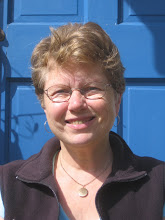
Yesterday the Cape Cod Times published an op-ed I wrote for its column My View. My piece contains important information. In case you do not get the CCT, here's the text:
"May I make a confession? A decade ago I tried to kill my mom’s Virginia creeper by spraying it repeatedly with Roundup. This mindless act took place before I became an environmental activist, before NStar decided to use glyphosate under the power lines, before I learned how toxic the world’s most popular weed-killer is.
Chemical companies prey on non-scientific types like me. Surely their products would not be for sale were they dangerous? Surely the EPA has investigated their toxicity? Why else would Roundup-ready crops have been approved for use across America?
The truth is, tens of thousands of unregulated chemicals are currently manufactured and marketed here. Like stealth agents, they have infiltrated our lives. The chemical industry works hard to make people believe their products are safe, but many chemicals are proving harmful to health.
The industry gives these substances unpronounceable names like polycholorinated- biphenyl or polybrominated-diphenyl-ether. Recently the media created acronyms which are easier to retain. More consumers now recognize PCB, BPA and PBDE, and try to avoid them – not such an easy task.
Here’s what you may encounter in a single day: In the home or school: toxic cleansers. At the office: toxic dust that contributes to infertility. In the kitchen: organopesticide residue on fruit and veggies. At the checkout counter: BPA-coated cash register receipts. In the bedroom: flame-retardant mattresses. In the bathroom: skin products made with phthalates, an estrogen-mimic that is believed to increase breast cancer risk and may contribute to obesity. Since thousands of toxic chemicals exist, let’s focus in on one: glyphosate, the main ingredient in my bottle of Roundup.
When I sprayed Mom’s Virginia creeper, I had no idea I was using a poison. Sure, I saw the “precautionary statements” of “hazards to humans & domestic animals” on the label and the “Notice: Buyer assumes all responsibility for safety and use not in accordance with directions.” What I did not know then is that glyphosate has been linked to birth defects and is considered an endocrine disruptor.
Endocrine disruptor? Think of a hormonal train making stops within the fetus as it develops. If all goes well, the hormonal messages get to their destinations. Cells develop normally. But toxic chemicals can derail the messengers. The most critical period, the period you really do not want derailment, is pregnancy. ADHD may be one result.
Exposure to pesticides has also been linked to autism. “Certain pesticides are believed to alter thyroid function, interfere with brain development and cause deficits in cognitive functions in the developing fetus,” reveals the Endocrine Disruption page at beyondpesticides.org.
And, emerging science indicates endocrine disruptors can create adverse biological effects at lower doses than previously suspected.
Two years ago I force-fed myself a science diet in order to understand what would result from NStar’s arbitrary switch to herbicidal spraying. I learned glyphosate does not break down easily. It will filter through our sandy soil and contaminate Cape Cod’s sole-source aquifer.
A Swedish study reported a higher incidence of Parkinson disease amongst farmers who use glyphosate. American farmers, who plant Roundup-ready crops, find themselves obliged to use more herbicides than ever before as weeds have become resistant to the chemical. Super weeds, ADHD, breast cancer, birth defects, Parkinson’s, infertility …
So, where’s the good news? The Safe Chemicals Act, a bill that seeks to regulate toxic chemicals, is now before Congress and, last week, Senator John Kerry signed on as a co-sponsor.
What of my mom’s Virginia creeper? I didn’t even manage to kill the damn thing. And, Roundup remains prominently displayed in your local hardware store. Don’t buy it.
Got weeds? Try vinegar."
Showing posts with label glyphosate. Show all posts
Friday, May 11, 2012
Cape Cod Times Publishes Op-Ed on Glyphosate
Posted by
Alexandra Grabbe
at
6:00 AM
Cape Cod Times Publishes Op-Ed on Glyphosate
2012-05-11T06:00:00-04:00
Alexandra Grabbe
Cape Cod|environment|glyphosate|toxic chemicals|
Comments
Labels:
Cape Cod,
environment,
glyphosate,
toxic chemicals
Tuesday, December 13, 2011
Update on Herbicial Spraying on Cape Cod
This weekend, at the Preservation Hall crafts fair, quite a few people asked me for an update on the situation regarding herbicidal spraying.
As far as I know, NStar plans to begin spraying four herbicides under the power lines in the spring. The moratorium will be up at the end of the month. The latest news is that the merger with Northeast Utilities has stalled. It is not clear to me exactly why. Northeast did not do such a hot job cleaning up after the storm in Connecticut last month, recent guests told me. They had no electricity for nine days. According to The New York Times, NStar CEO Thomas May will make $8.3 million if the merger does happen. May is not the only one who will become even richer. NStar's top five executives will receive $50 million in severance and change-of-control payments. This is obscene. What happened to corporate responsibility? When did greed take over? Why don't such corporate leaders care about the lives of citizens? You may have seen the NStar trucks out this month, trimming branches. Yes, they care about keeping the power on during winter storms. Why are they unable to extend that empathy to caring about our health?
Today, the Cape Cod Times published an article written
by my organic horticulturist friend Laura Kelly in the column My View. Please read and tell your friends to pay attention. Her piece explains why NStar should abandon its plan to use herbicides over our sole-source aquifer.
Here's Laura:
"NStar plans to begin herbicidal spraying throughout Cape Cod's rights of way in 2012. The second moratorium ends Dec. 31, and there has been no update from our utility company.
As an organic gardener, I've been active in the effort to prevent contamination of our sole-source aquifer through the unnecessary overuse of herbicides. For the past three years, NStar has listened to thousands of Cape residents like me, as well as nonresidents, all requesting the use of alternatives, but NStar executives haven't budged. They'll move forward with spraying 120 miles of Cape power lines with a combination of herbicides: Accord (glyphosate), Krenite S (fosamine ammonium), Escort XP (metsulfuron-methyl), Arsenal (imazapyr) and Garlon 4 (triclopyr), a combination never tested together or with a surfactant on Cape's sandy soils.
These chemicals come from the same company that brought us Agent Orange, DDT, dioxin and genetically modified crops. As usual, Monsanto claims its product is safe, based on its own testing. Will this happen with Roundup/glyphosate as well? I guess it already has, right? Here we are repeating history by making the same mistakes.
I suggest our state representatives adopt the precautionary principle to protect our environment and the habitats that naturally thrive on Cape Cod. Once these toxic chemicals are released onto our land, there's no turning back. Manual labor is sufficient to prune vegetation. It's only a matter of keeping up with new growth. But NStar prefers toxins. Considering these chemicals have not been tested together, or on sandy soil, I worry about our drinking water.
Many consumers believe Roundup is safe. Until recently, researchers focused solely on the health effects of a single active ingredient, glyphosate. New research at the University of Caen, as reported in Green Living Ideas, has shown that the "inert" ingredients amplify the toxic effects on human cells. Turns out "inert" ingredients are sometimes highly toxic, too. (Disclosure of "inert" ingredients isn't required on labels).
People have asked me if glyphosate is in the Roundup brand herbicide. Yes, it is. And one of its "inert" ingredients, called POEA (polyethoxethylene-alkylamine), has been found to kill human cells, especially embryonic and placental cells. POEA is a surfactant derived from animal fat, added to help Roundup penetrate plants' surfaces, making it more effective.
Researchers have discovered that POEA amplifies glyphosate's toxicity. Even at low exposures, Roundup is unhealthy for people. Evidence of its harmful effects keeps piling up: The University of Caen research found that Roundup causes birth defects, infertility, and malformations in newborns whose mothers are exposed to glyphosate during pregnancy. Also, the herbicide continues to be active much longer than we were led to believe.
According to a report in Earth Open Source, industry and regulators knew the truth about Roundup in the 1980s, but corporate executives failed to inform the public. I look upon this situation as an environmental health disaster in the making. Future generations will look back and say, how could you allow this? What were you thinking?
Like Roundup, Accord contains glyphosate. I want to be able to consume drinking water from Cape Cod's sole-source aquifer. How about you? What if spraying herbicides by NStar contaminates our water? We don't have a pipeline from a quarry or another fresh water source close by.
Help protect local drinking water by telling your state representatives to ban Roundup/glyphosate altogether and protect pets, children and the future of Cape drinking water.
We also need to do our part and not spread synthetic chemicals or fertilizers onto our own land. I use chicken manure, which works quite well.
Time's running out. As an organic gardener, I know alternative methods exist to control vegetative overgrowth. Suggest that NStar seek alternatives. Let them be creative and forward-thinking. May they look outside the chemical box for a truly greener future."
Today, the Cape Cod Times published an article written
Here's Laura:
"NStar plans to begin herbicidal spraying throughout Cape Cod's rights of way in 2012. The second moratorium ends Dec. 31, and there has been no update from our utility company.
As an organic gardener, I've been active in the effort to prevent contamination of our sole-source aquifer through the unnecessary overuse of herbicides. For the past three years, NStar has listened to thousands of Cape residents like me, as well as nonresidents, all requesting the use of alternatives, but NStar executives haven't budged. They'll move forward with spraying 120 miles of Cape power lines with a combination of herbicides: Accord (glyphosate), Krenite S (fosamine ammonium), Escort XP (metsulfuron-methyl), Arsenal (imazapyr) and Garlon 4 (triclopyr), a combination never tested together or with a surfactant on Cape's sandy soils.
These chemicals come from the same company that brought us Agent Orange, DDT, dioxin and genetically modified crops. As usual, Monsanto claims its product is safe, based on its own testing. Will this happen with Roundup/glyphosate as well? I guess it already has, right? Here we are repeating history by making the same mistakes.
I suggest our state representatives adopt the precautionary principle to protect our environment and the habitats that naturally thrive on Cape Cod. Once these toxic chemicals are released onto our land, there's no turning back. Manual labor is sufficient to prune vegetation. It's only a matter of keeping up with new growth. But NStar prefers toxins. Considering these chemicals have not been tested together, or on sandy soil, I worry about our drinking water.
Many consumers believe Roundup is safe. Until recently, researchers focused solely on the health effects of a single active ingredient, glyphosate. New research at the University of Caen, as reported in Green Living Ideas, has shown that the "inert" ingredients amplify the toxic effects on human cells. Turns out "inert" ingredients are sometimes highly toxic, too. (Disclosure of "inert" ingredients isn't required on labels).
People have asked me if glyphosate is in the Roundup brand herbicide. Yes, it is. And one of its "inert" ingredients, called POEA (polyethoxethylene-alkylamine), has been found to kill human cells, especially embryonic and placental cells. POEA is a surfactant derived from animal fat, added to help Roundup penetrate plants' surfaces, making it more effective.
Researchers have discovered that POEA amplifies glyphosate's toxicity. Even at low exposures, Roundup is unhealthy for people. Evidence of its harmful effects keeps piling up: The University of Caen research found that Roundup causes birth defects, infertility, and malformations in newborns whose mothers are exposed to glyphosate during pregnancy. Also, the herbicide continues to be active much longer than we were led to believe.
According to a report in Earth Open Source, industry and regulators knew the truth about Roundup in the 1980s, but corporate executives failed to inform the public. I look upon this situation as an environmental health disaster in the making. Future generations will look back and say, how could you allow this? What were you thinking?
Like Roundup, Accord contains glyphosate. I want to be able to consume drinking water from Cape Cod's sole-source aquifer. How about you? What if spraying herbicides by NStar contaminates our water? We don't have a pipeline from a quarry or another fresh water source close by.
Help protect local drinking water by telling your state representatives to ban Roundup/glyphosate altogether and protect pets, children and the future of Cape drinking water.
We also need to do our part and not spread synthetic chemicals or fertilizers onto our own land. I use chicken manure, which works quite well.
Time's running out. As an organic gardener, I know alternative methods exist to control vegetative overgrowth. Suggest that NStar seek alternatives. Let them be creative and forward-thinking. May they look outside the chemical box for a truly greener future."
Posted by
Alexandra Grabbe
at
8:49 AM
Update on Herbicial Spraying on Cape Cod
2011-12-13T08:49:00-05:00
Alexandra Grabbe
Cape Cod|glyphosate|herbicidal spraying|
Comments
Labels:
Cape Cod,
glyphosate,
herbicidal spraying
Monday, September 19, 2011
Another Letter to the Editor Published Yesterday
Posted by
Alexandra Grabbe
at
8:09 PM
Another Letter to the Editor Published Yesterday
2011-09-19T20:09:00-04:00
Alexandra Grabbe
glyphosate|herbicidal spraying|
Comments
Labels:
glyphosate,
herbicidal spraying
Subscribe to:
Posts (Atom)